01
Updates
New models, platform releases, and product enhancements.
Resources
Research insights, product updates, practical use cases, webinars, and company news from Vecura.
01
New models, platform releases, and product enhancements.
02
Company milestones, partnerships, events, and announcements.
03
Research analysis, scientific perspectives, and deep dives.
04
Practical examples of AI workflows across life science R&D.
05
Upcoming sessions and on-demand AI4Life Innovation Talks.
06
Hands-on training program for teams putting AI to work in life science discovery.
Use Cases
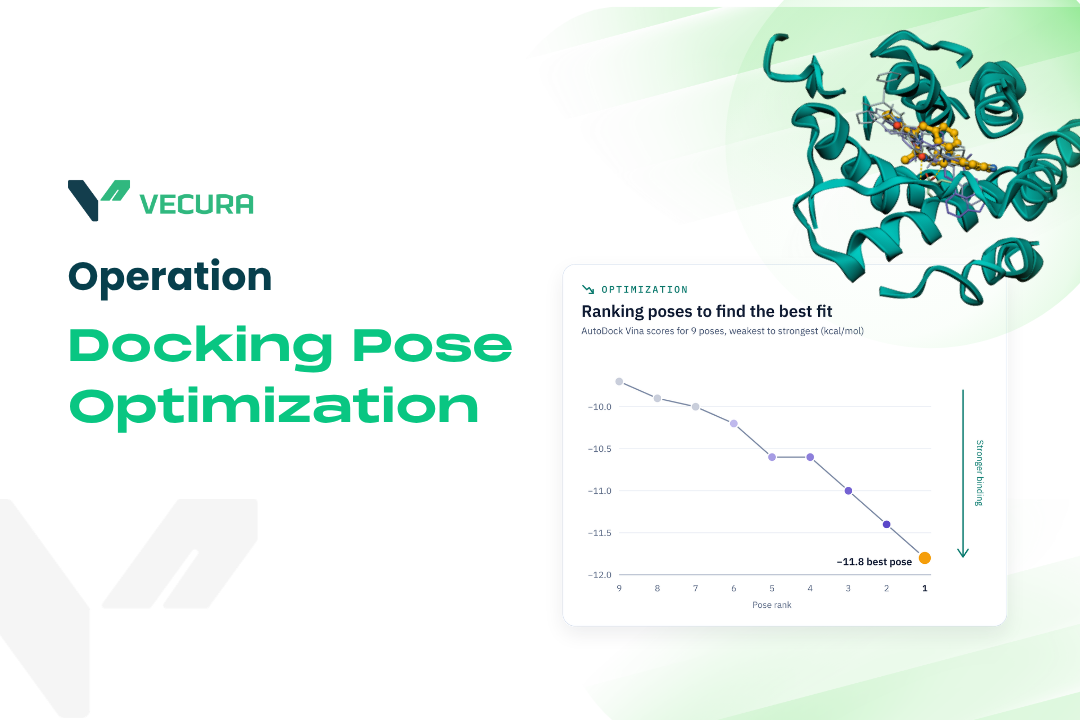
Proteins move, and a single structure does not capture that. Vecura provides five related operations for working with protein dynamics: running physics-based simulations, analysing existing trajectories, generating trajectories with learned models, analysing conformational ensembles, and generating ensembles from sequence. Together they support biophysical characterisation, ensemble-based docking, binding kinetics and conformational landscape exploration. The five operations differ mainly in what you start from and how much physical accuracy you need. The selection table below is the fastest route to the right one.
Insights
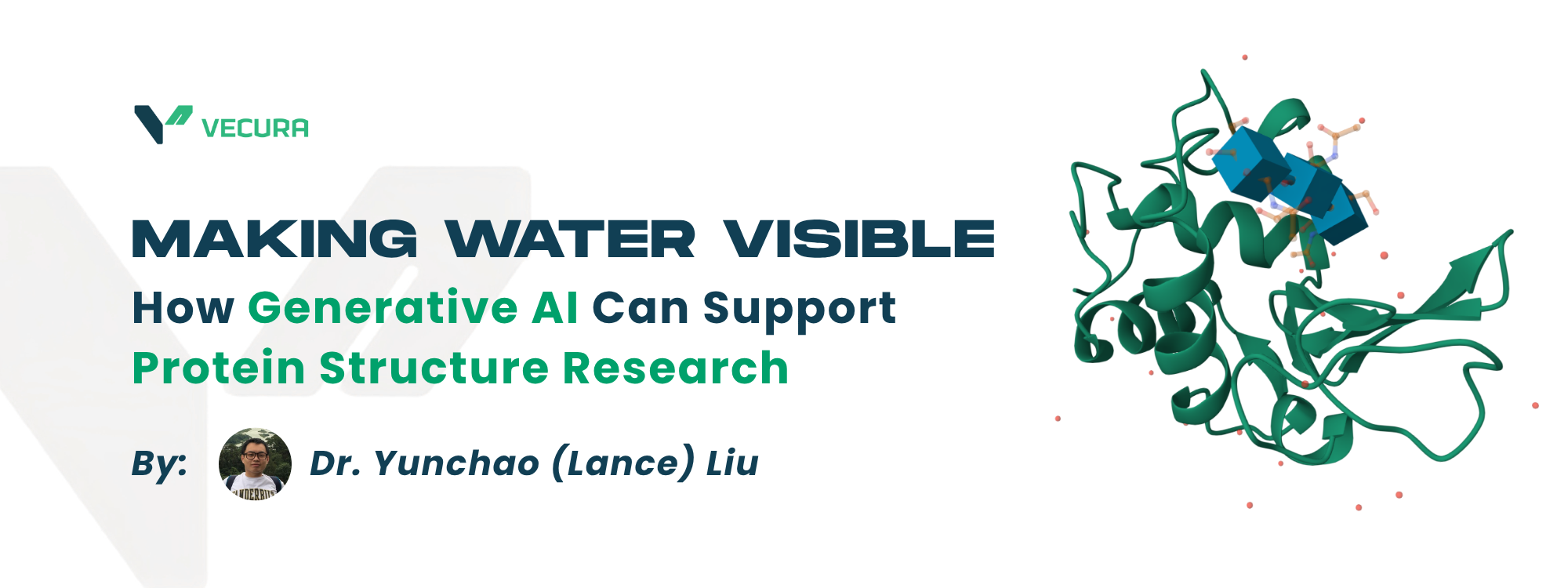
Water is fundamental to biological systems, yet the individual water molecules surrounding proteins are often difficult and expensive to model. SuperWater, a generative AI framework developed to predict water molecule positions around biomolecular complexes, offers a new approach to this longstanding computational challenge.
Updates
Discover how msa-search, a GPU-accelerated service, slashes the compute time of Multiple Sequence Alignments (MSA) from hours to seconds, significantly accelerating AlphaFold2 and ColabFold structure prediction pipelines.